







.png "Commercial kitchen flooring, logan, and garage flooring, layton, for durable surfaces")



.png "Own the Spotlight at Every Ceremony")











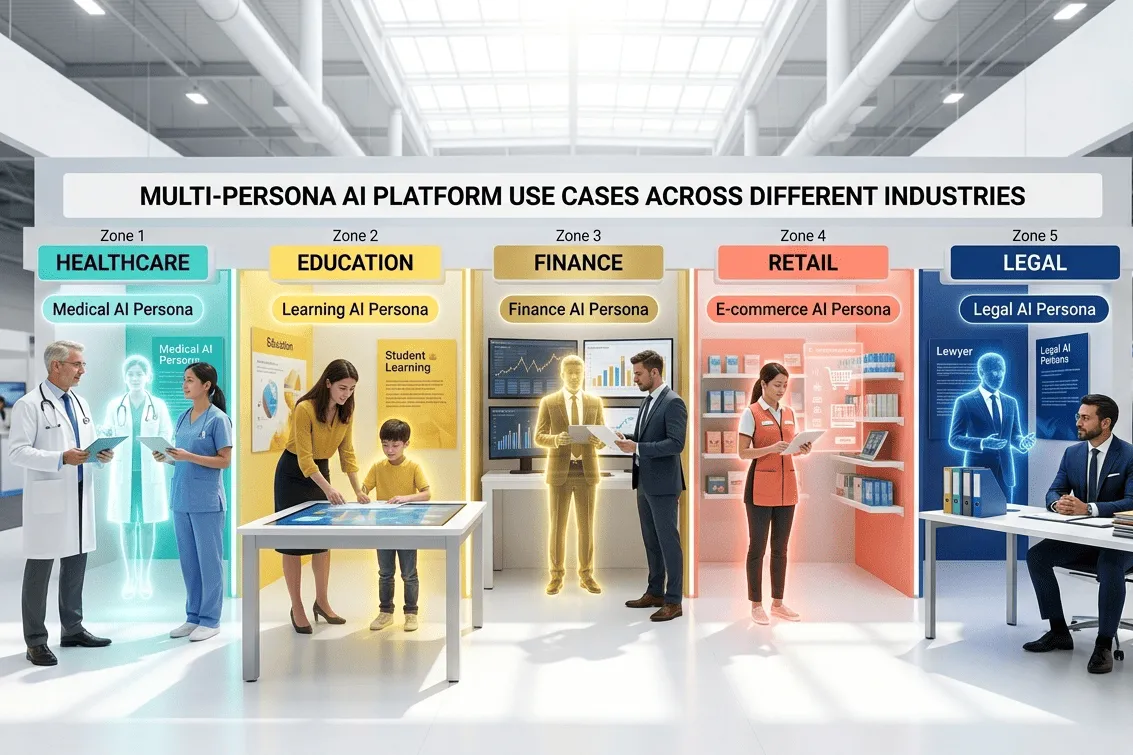
One Approach, Many Industry Applications
Every industry deals with questions.
Customers ask questions. Employees ask questions. Teams rely on answers to move forward.
But the nature of those questions changes depending on the industry.
Healthcare needs clarity and precision.
E-commerce needs speed.
Education needs explanation.
Finance needs accuracy.
Handling all of these with a single approach is not practical.
This is where a Multi-Persona AI Platform for All Your Questions becomes valuable. It adapts based on the context, making it suitable across different industries.
E-commerce: Faster Decisions, Better Conversions
In e-commerce, time matters.
A customer browsing a product may have a quick question.
“Is this available in my size?”
“Does this support what I need?”
If they don’t get an answer quickly, they leave.
A multi-persona system helps here by providing instant responses.
It can:
- Offer quick answers for simple queries
- Provide detailed explanations when needed
This improves customer confidence and increases conversions.
Healthcare: Clarity and Trust in Information
Healthcare is sensitive.
Users need clear and accurate information.
At the same time, not every user understands medical terms.
A multi-persona system helps bridge this gap.
It can:
- Simplify explanations for general users
- Provide detailed insights for professionals
This improves understanding and builds trust.
Education: Supporting Different Learning Styles
Students learn in different ways.
Some prefer simple explanations.
Some want detailed breakdowns.
A fixed system cannot support all these preferences.
A multi-persona approach adapts to the learner.
It can:
- Explain concepts step by step
- Provide summaries for quick revision
This makes learning more flexible.
Finance: Precision Without Confusion
Finance requires accuracy.
Users often deal with complex topics.
At the same time, not everyone has the same level of understanding.
A multi-persona system helps by adjusting responses.
It can:
- Simplify financial terms for beginners
- Provide precise details for experienced users
This reduces confusion and improves decision-making.
SaaS Platforms: Improving User Experience
Software platforms rely heavily on user interaction.
Users often need help with features, setup, or troubleshooting.
A multi-persona system enhances this experience.
It can:
- Guide new users through onboarding
- Provide quick solutions for experienced users
This improves usability and reduces support load.
Customer Support: Handling Volume Efficiently
Support teams deal with a wide range of queries.
Some are simple. Some are complex.
A multi-persona system helps manage this variety.
It can:
- Handle routine queries automatically
- Provide detailed responses for complex issues
This improves efficiency and reduces workload.
Internal Operations: Faster Knowledge Access
Employees often spend time searching for information.
Policies, processes, and guidelines are scattered.
A multi-persona system centralizes this.
Employees can ask questions and get answers instantly.
This improves productivity and reduces delays.
Travel and Hospitality: Enhancing Customer Interaction
In travel, users often need quick answers.
Booking details. Availability. Policies.
A multi-persona system improves this interaction.
It can:
- Provide quick answers for common queries
- Offer detailed information when needed
This improves customer satisfaction.
Retail: Personalized Shopping Experiences
Retail is moving toward personalization.
Customers expect recommendations and guidance.
A multi-persona system supports this.
It can adapt responses based on user preferences.
This creates a more engaging shopping experience.
Media and Content Platforms: Better Content Discovery
Content platforms often have large libraries.
Users struggle to find what they need.
A multi-persona system helps by providing direct answers.
It can:
- Suggest relevant content
- Explain topics based on user queries
This improves content discovery.
Aligning With Industry Trends
Across industries, systems are becoming more adaptive.
Insights from Trends in Artificial Intelligence show a shift toward context-aware solutions.
Businesses are moving toward systems that understand user needs better.
A multi-persona approach fits this trend.
Role of Development Expertise in Implementation
Building such systems requires expertise.
Many AI Development Companies are focusing on creating platforms that can handle diverse use cases.
They design solutions that adapt to different industries and user needs.
This ensures effective implementation.
Reducing Friction Across Industries
Despite differences, one challenge is common.
Friction in accessing information.
A multi-persona system reduces this friction.
It aligns responses with user expectations.
This improves experiences across industries.
Scaling Across Different Business Models
Whether it is B2C or B2B, scalability matters.
A multi-persona system supports growth.
It can handle increasing queries while maintaining quality.
This makes it suitable for different business models.
Why Businesses Are Adopting This Approach
Businesses across industries are recognizing the value.
Better experiences lead to:
- Higher engagement
- Improved efficiency
- Stronger customer relationships
A multi-persona approach supports these outcomes.
The Bigger Picture
The way industries handle questions is changing.
It is moving from static systems to adaptive ones.
Users expect systems to adjust to them.
What It All Comes Down To
Every industry has different needs.
But one thing remains the same.
Users want answers that make sense for them.
A Multi-Persona AI Platform for All Your Questions makes this possible by adapting responses based on context.
And that is why it works across industries.